
Technical resources · PHE-INDIA
Plate heat exchanger working principle
A plate heat exchanger transfers heat between two fluid streams through metal plates. In a gasketed unit, the plates form alternating channels: one stream gives up heat while the other receives it. The fluids remain in separate passages during normal operation.
How the plate pack works
A fixed frame plate and a movable pressure plate hold the plate pack together. Gaskets seal the edges and route each fluid into its assigned channels. Heat passes from the hotter fluid, through the plate wall, to the colder fluid. Corrugated plates increase the effective surface and disturb the flow, helping heat transfer.
In a typical counterflow arrangement, the streams travel in opposite directions. This maintains a useful temperature difference along the plate surface. Actual port positions and the number of passes depend on the selected unit; always use its approved connection drawing.
Plate heat exchanger flow diagram
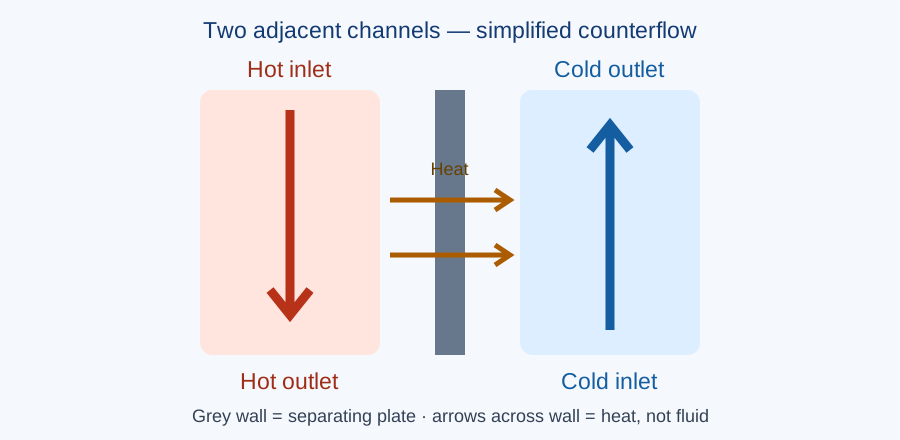
Follow the hot inlet to the hot outlet and the cold inlet to the cold outlet. The arrows across the centre show heat transfer, not fluid crossing the plate. The drawing omits manifolds, gasket grooves and pass partitions.
What changes the outlet temperature?
Outlet temperatures depend on both inlet temperatures, the flow rates, fluid properties, available plate area and the condition of the heat-transfer surfaces. Reducing a flow rate can change the outlet temperature without increasing total heat recovered. A change in viscosity or fouling can alter both heat transfer and pressure drop.
For a single-phase fluid with approximately constant specific heat, the heat duty is Q = ṁ × cp × ΔT. Flow and temperature measurements must use consistent units. Condensing steam and other phase-change duties require an enthalpy calculation instead.
From principle to plant application
The same separation principle supports industrial oil and water cooling and food and beverage heating or cooling. Material compatibility, cleanability and the required temperature programme decide whether a particular plate pack is suitable.
A compact exchanger still needs space for connections, inspection and opening the frame. See the design and selection checklist before requesting a quotation.
Common questions
Do the two liquids mix?
They are separated in normal operation. A damaged plate or sealing fault can compromise separation; a process requiring special contamination protection needs an appropriate design review.
Does every PHE use counterflow?
No. Counterflow is common, but multi-pass and specialised arrangements differ. The supplied drawing determines the correct connections.
Can I save this explanation as a PDF?
Download the working principle notes (PDF), or use your browser’s Print / Save as PDF command for this illustrated page.